
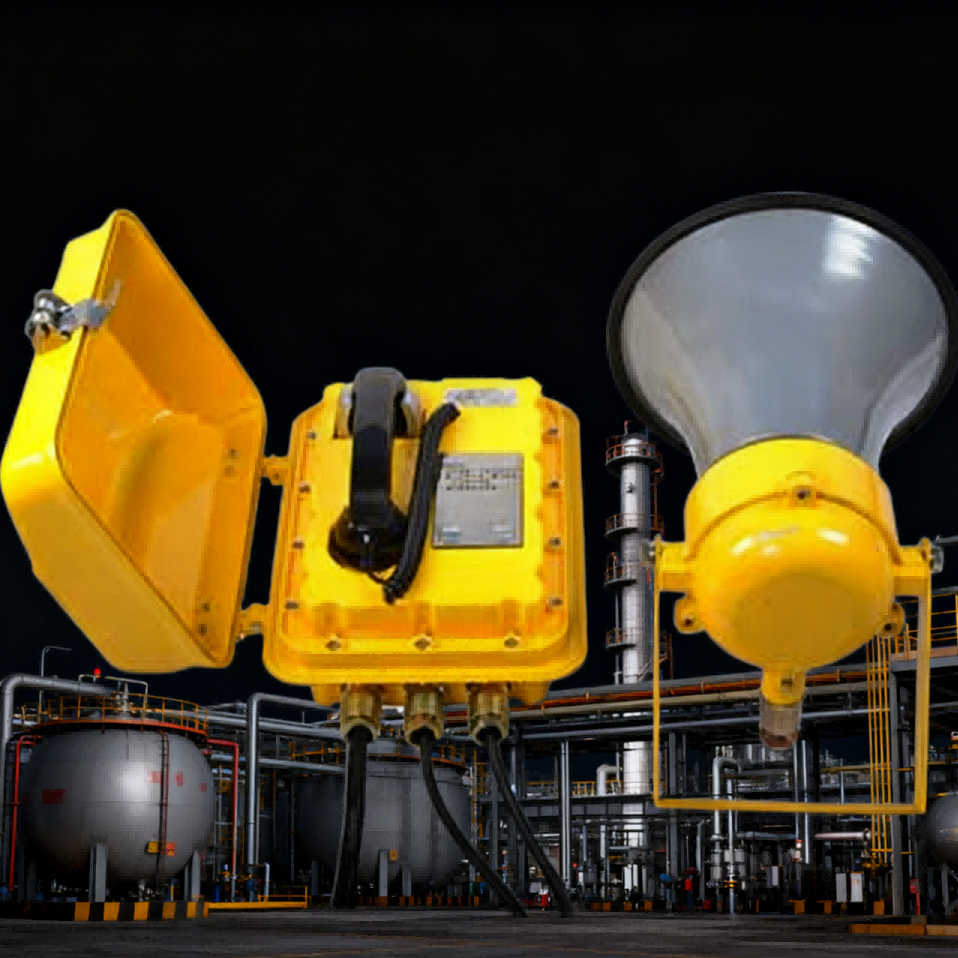
Flame-proof phones are vital in chemical storage zones. They prevent accidents by removing ignition sources. Electrical sparks or heat can easily trigger explosions or fires. These zones often have flammable vapors or dust. A Flame-Proof Telephone ensures safety and protects personnel from these dangers.
Key Takeaways
- Chemical storage zones have flammable materials. Even small sparks can cause explosions or fires. Standard phones are dangerous in these areas.
- Flame-proof phones use special technology. They stop sparks and control heat. This prevents explosions and fires.
- These phones allow safe communication during emergencies. They help workers report problems and get help without causing new dangers.
Understanding Ignition Risks in Chemical Storage Zones
The Volatile Nature of Flammable Environments
Chemical storage zones hold many dangerous substances. These areas often contain flammable vapors, gases, or fine dust particles. Imagine a cloud of gasoline fumes or tiny wood dust floating in the air. These elements are highly volatile. This means they can ignite very easily. Even a small spark can turn a calm environment into a dangerous one. Workers must understand this constant threat.
Common Ignition Sources and Standard Device Hazards
Many things can cause an ignition. Static electricity is one common source. A simple friction can create a spark. Hot surfaces also pose a risk. A motor running too long can get very hot. Standard electronic devices are big hazards. Your regular cell phone or a flashlight can create tiny electrical sparks when you turn them on or off. These sparks are usually harmless in a normal office. However, in a chemical storage zone, they become extremely dangerous. They can easily ignite the volatile substances around them.
Catastrophic Consequences of Uncontrolled Ignition
An uncontrolled ignition in these zones leads to terrible outcomes. You can expect explosions or rapid-spreading fires. These events cause severe injuries or even death to personnel. They also result in massive property damage. Businesses face huge financial losses. Environmental contamination is another serious consequence. A single spark can trigger a chain of devastating events. Therefore, preventing ignition is a top priority.
The Science Behind a Flame-Proof Telephone: Intrinsic Safety
Defining Intrinsically Safe Technology
Intrinsically safe technology is a clever way to prevent explosions. It focuses on limiting energy. Devices designed this way cannot release enough electrical or thermal energy to ignite flammable gases, vapors, or dust. Think of it like this: even if a fault happens, the device simply does not have enough power to create a spark or get hot enough to cause a fire. This makes it super safe for dangerous areas.
Key Design Principles of a Flame-Proof Telephone
A Flame-Proof Telephone uses several smart design principles. First, engineers limit the electrical current and voltage. This prevents sparks. Second, they use special barriers. These barriers stop too much energy from reaching the hazardous area. Components are often encapsulated or sealed. This keeps flammable substances away from electrical parts. The device also controls its surface temperature. It never gets hot enough to ignite anything around it. These features make the Flame-Proof Telephone a reliable safety tool.
Differentiating Flame-Proof from Rugged Devices
People often confuse flame-proof devices with rugged ones. They are very different. A rugged device is tough. It can handle drops, dust, and water. It is built to survive harsh physical conditions. However, a rugged device does not necessarily prevent ignition. It can still produce sparks or heat. A flame-proof device, on the other hand, specifically prevents ignition in explosive atmospheres. It might also be rugged, but its main job is safety from fire and explosion. Always choose intrinsically safe for hazardous zones.
How a Flame-Proof Telephone Directly Prevents Accidents
Eliminating Electrical Sparks and Arcs
A Flame-Proof Telephone plays a crucial role in preventing accidents. It achieves this by completely eliminating electrical sparks and arcs. Standard electronic devices create tiny sparks when you turn them on or off. These sparks are usually harmless. However, in chemical storage zones, these small sparks become extremely dangerous. They can easily ignite flammable gases, vapors, or dust. Intrinsically safe technology limits the electrical energy within the device. This means the phone cannot produce a spark hot enough to cause an explosion. Engineers design these phones to operate with very low power. This low power ensures no ignition occurs, even if a component fails.
Controlling Surface Temperature to Prevent Ignition
Controlling surface temperature is another key safety feature. Many flammable substances have a specific ignition temperature. If a device’s surface gets too hot, it can ignite these materials. A regular phone or other electronic device can heat up during use or if it malfunctions. A Flame-Proof Telephone, however, prevents this. Its design ensures the device’s external surfaces never reach a temperature high enough to ignite any flammable substance in the environment. This careful thermal management adds another layer of protection. It removes a common source of ignition in hazardous areas.
Mitigating Static Electricity Discharge
Static electricity is a silent danger in chemical storage zones. Friction can build up static charges on objects or people. A sudden discharge of this static electricity creates a spark. This spark can be powerful enough to ignite volatile chemicals. Flame-proof devices often incorporate materials and designs that prevent static charge buildup. They might use anti-static coatings or conductive materials to safely dissipate any static electricity. This design feature significantly reduces the risk of ignition from static discharge. It protects workers and the facility from an often-overlooked hazard.
Ensuring Safe and Reliable Emergency Communication
In an emergency, clear and reliable communication is vital. A Flame-Proof Telephone ensures workers can communicate safely, even in hazardous conditions. Standard phones are unsafe to use during an incident in a chemical storage zone. They could cause a secondary explosion. Flame-proof phones allow personnel to report incidents, call for help, or coordinate evacuation efforts without creating new risks. This reliable communication system helps emergency responders act quickly and effectively. It protects lives and minimizes damage during critical situations.
Flame-proof phones are essential safety tools in chemical storage zones. They directly prevent catastrophic accidents by eliminating ignition risks. Their specialized design ensures safe communication. This significantly contributes to overall operational safety and compliance. Investing in a Flame-Proof Telephone is a critical part of a robust safety culture.
FAQ
What makes a phone flame-proof?
Flame-proof phones use intrinsic safety. They limit electrical and thermal energy. This prevents sparks or heat from igniting flammable materials. 💡
Is a rugged phone safe for chemical zones?
No, rugged phones are tough but not intrinsically safe. They can still create sparks. Always use a certified flame-proof device in hazardous areas.
How do these phones prevent static sparks?
Flame-proof phones use special materials. These materials prevent static charge buildup. They safely dissipate any static electricity. This reduces ignition risk.
 English
  Français
  Deutsch
  日本語
日本語  한국어
한국어